Lower-carbon heat
Move away from direct fossil-fuel combustion at the property.
An air-source heat pump can provide comfortable, lower-carbon heating when the home, emitters and system are assessed together.
Discuss your heating →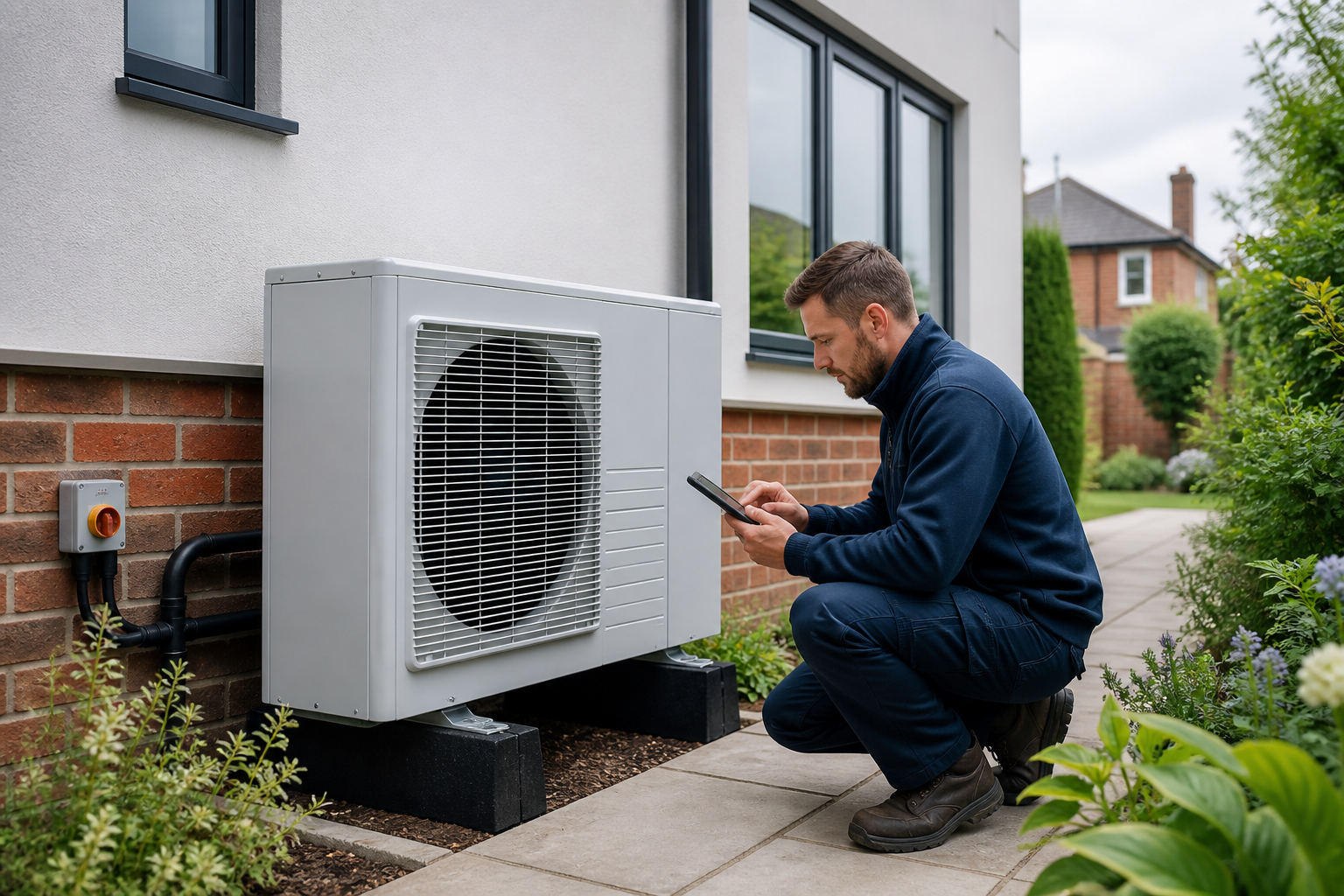
Air-source heat pumps
Heat pumps work differently from traditional boilers. They usually operate for longer at lower flow temperatures, which means heat loss, radiator or underfloor-heating capacity, hot-water demand and controls all need to be understood.
We begin with the property rather than the product. A joined-up assessment helps determine whether a heat pump is suitable, what supporting improvements may be beneficial and how the system should be designed for dependable comfort.
The strongest results come from proper specification and a building that is ready for low-temperature heating.
Move away from direct fossil-fuel combustion at the property.
A well-designed system maintains steady warmth rather than short bursts of high heat.
Coordinate heating with insulation, emitters, solar and smart energy controls.
Use weather compensation and appropriate controls to support efficient operation.
Our approach
Room-by-room demand helps establish the output the home requires.
We consider emitters, pipework, hot water, electrical supply and outdoor-unit location.
The heat pump, cylinder, controls and any emitter changes are designed as one system.
The installation is set up correctly and you are shown how to operate it.
Common questions
A correctly sized and commissioned system should meet the assessed heat demand. Comfort depends on system design, emitters, controls and the building fabric.
Not necessarily. Appropriately sized radiators can work with a heat pump. Existing emitters should be assessed against the required room output and design temperatures.
Reducing avoidable heat loss can lower required output and support performance, but recommendations should be based on the individual property rather than a blanket rule.
Start with a proper conversation about the property and your heating needs.